
Cloud Agnostic vs. Cloud Native : Key Difference and Why It Matters  

The shift to cloud-first business models has made architectural decisions more critical than ever. Organisations comparing cloud native vs cloud agnostic approaches want clarity on how each path influences speed, cost and long-term flexibility. These decisions affect how teams build, deploy and scale digital products, and they shape the level of control companies retain over their infrastructure. Understanding the fundamental differences helps technology leaders choose an approach that aligns with strategy — not just short-term delivery priorities.
What Does Cloud Agnostic Mean?

A cloud agnostic strategy refers to building applications and workloads in a way that allows them to run on any major provider such as AWS, Microsoft Azure or Google Cloud. This approach avoids being tied to a single vendor’s proprietary tools, APIs or services, giving businesses freedom to switch platforms or distribute workloads based on cost, performance or compliance requirements.

Cloud agnostic architectures often rely on container orchestration tools, open-source technologies and standardised deployment pipelines, making workloads portable across environments without major rework.

Benefits of a Cloud Agnostic Strategy

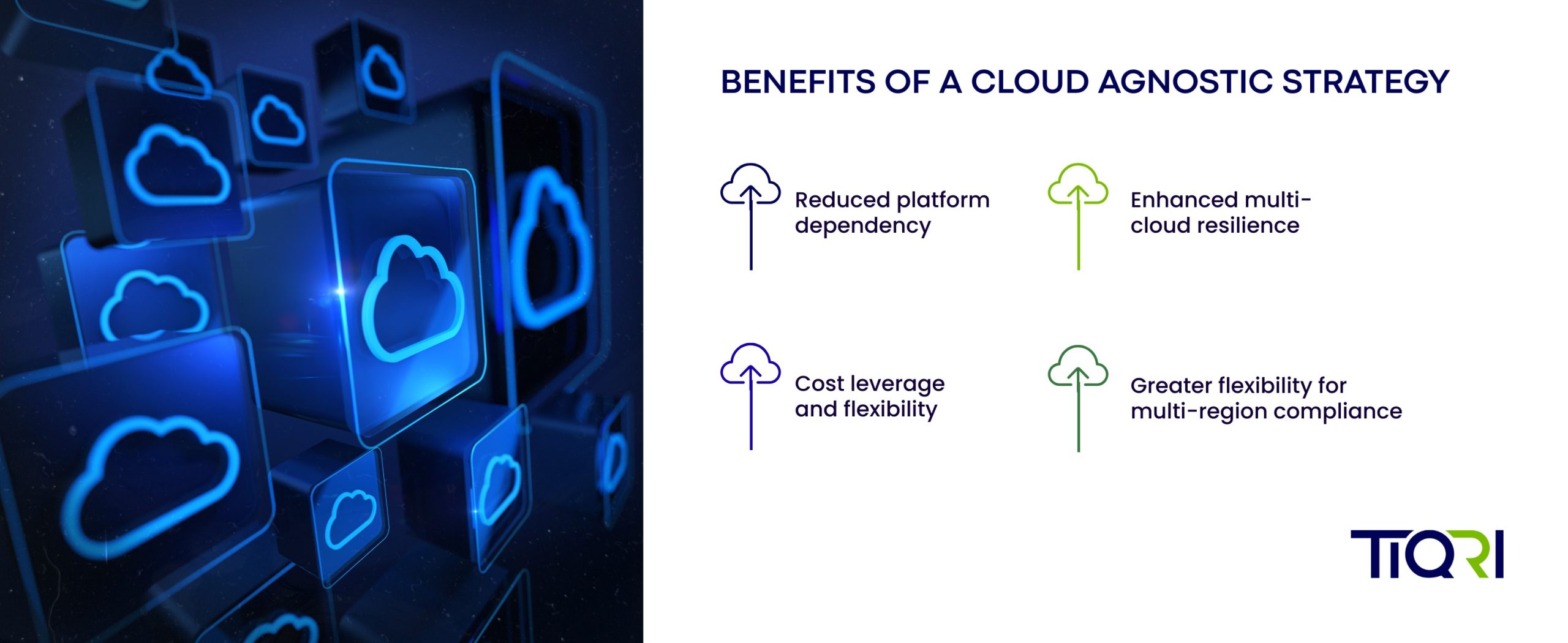
A cloud agnostic model offers advantages for organisations that operate in multiple regions, industries or regulatory environments. Cloud agnostic strategies are particularly useful in industries with strict compliance needs, where workloads may need to move based on data residency requirements. Its advantages include:

  • Reduced platform dependency where workloads can shift if pricing models change or service disruptions occur.
  • Improved resilience, as multi-cloud distribution prevents a single outage from taking systems offline.
  • Cost leverage and flexibility in how teams can run workloads where they gain the strongest commercial advantage.
  • Better compliance alignment as data residency requirements can be met by selecting optimal hosting regions.

What Does Cloud Native Mean?

Cloud native applications are built specifically to run within a chosen cloud platform, using managed services, serverless components and platform-optimised architecture patterns.

This design style embraces microservices, continuous integration and continuous deployment, making it possible to deliver features faster while maintaining reliability at scale. Rather than focusing on portability, cloud native systems focus on taking full advantage of the target platform’s capabilities.

Benefits of a Cloud Native Approach

A cloud native approach is highly effective for organisations prioritising speed, reliability and modern software practices. This approach delivers strong results when time-to-market and scalable application performance are central priorities. Key benefits include:

  • Rapid feature release cycles, so teams can ship updates faster using native development tools and managed services.
  • High scalability as applications respond to fluctuating demand without manual adjustment.
  • Reduced maintenance burden as providers manage core infrastructure, allowing developers to focus on product enhancements.
  • Greater operational efficiency, as offloading infrastructure management to the provider allows teams to focus on features and customer outcomes.

Key Differences and Considerations

Both models support digital transformation, but they serve different strategic outcomes. Cloud agnostic design maximises independence and long-term optionality, while cloud native architecture focuses on speed and operational efficiency. The decision usually comes down to control versus optimisation.

Agnostic workloads demand more configuration and abstraction up front, but they avoid long-term dependency risks. Native workloads unlock faster delivery and greater efficiency, but they tie the organisation to a single provider’s roadmap and pricing. Decision-makers should evaluate regulatory obligations, engineering maturity, product scalability expectations, budget constraints and the organisation’s comfort with vendor reliance.

Some companies adopt a workload-by-workload strategy. Regulated or globally distributed systems may be built with agnostic principles, while fast-moving digital products are developed natively. This avoids a one-size-fits-all approach and delivers measurable value where it matters.

Which Cloud Platform Should You Choose?

If flexibility, compliance management and long-term autonomy are top priorities, a cloud agnostic approach may be the stronger fit. If rapid releases, platform automation and simplified operations matter more, cloud native architecture is often the better choice. The best strategies acknowledge that different workloads have different needs.

This is where experienced guidance becomes essential. Successful cloud adoption requires not just architecture, but also security, DevOps alignment, cost management, monitoring and continuous improvement.

TIQRI offers cloud infrastructure solutions focused on driving scalability, flexibility and operational efficiency. Their services span cloud migration, optimisation of existing infrastructure, cloud security and management, DevOps & CI/CD, and data analytics & business intelligence. This breadth of capability means organisations can modernise legacy systems, streamline deployment pipelines and adopt cloud practices that support growth, performance and long-term viability.

A Practical Path Forward

Cloud strategy is not a one-time decision but a continuous evolution that adapts to business growth, emerging technology and changing market demands. The most successful organisations treat the cloud as a long-term capability rather than a tool, focusing on scalability, resilience and efficiency as they expand. A well-planned approach ensures that applications remain reliable, teams can deliver updates quickly and operational costs stay under control as workloads grow more complex.

TIQRI supports enterprises in building cloud ecosystems that are robust, secure and ready for future demands. Instead of navigating the transition alone, businesses can rely on a partner that brings clarity to complex decisions and keeps cloud environments performing at their best.

To move forward with a cloud strategy that truly supports your goals, explore solutions from TIQRI and connect with the team for tailored guidance and end-to-end delivery support.

Get in touch today to discuss your project. Reach out to Alex on mobile +47 477 59 563 or email [email protected]

Klar til å diskutere prosjektet ditt med oss?

    Ta kontakt for en uforpliktende prat