
What Is Enterprise Software and How It Differs from Other Software

Enterprise software development has become a cornerstone of modern digital transformation, supporting organisations that need dependable systems to manage increasingly complex operations.

As global businesses expand their digital footprint, the need has never been greater for platforms that simultaneously streamlines workflows and strengthens collaboration and data access.

Companies aiming for long term growth are turning to solutions that enhance efficiency, reduce repetitive tasks, and create reliable structures for future scalability. The market reflects this shift, with demand rising across industries that require integrated systems to keep pace with competitors and evolving customer expectations.
What Is Enterprise Software?

Enterprise software refers to applications designed to support core organisational processes at scale. These platforms are built to coordinate cross-functional tasks, maintain high accuracy, and support multiple users with varying permission levels. They play a crucial role in managing everything from planning and finance to logistics and customer relationships.

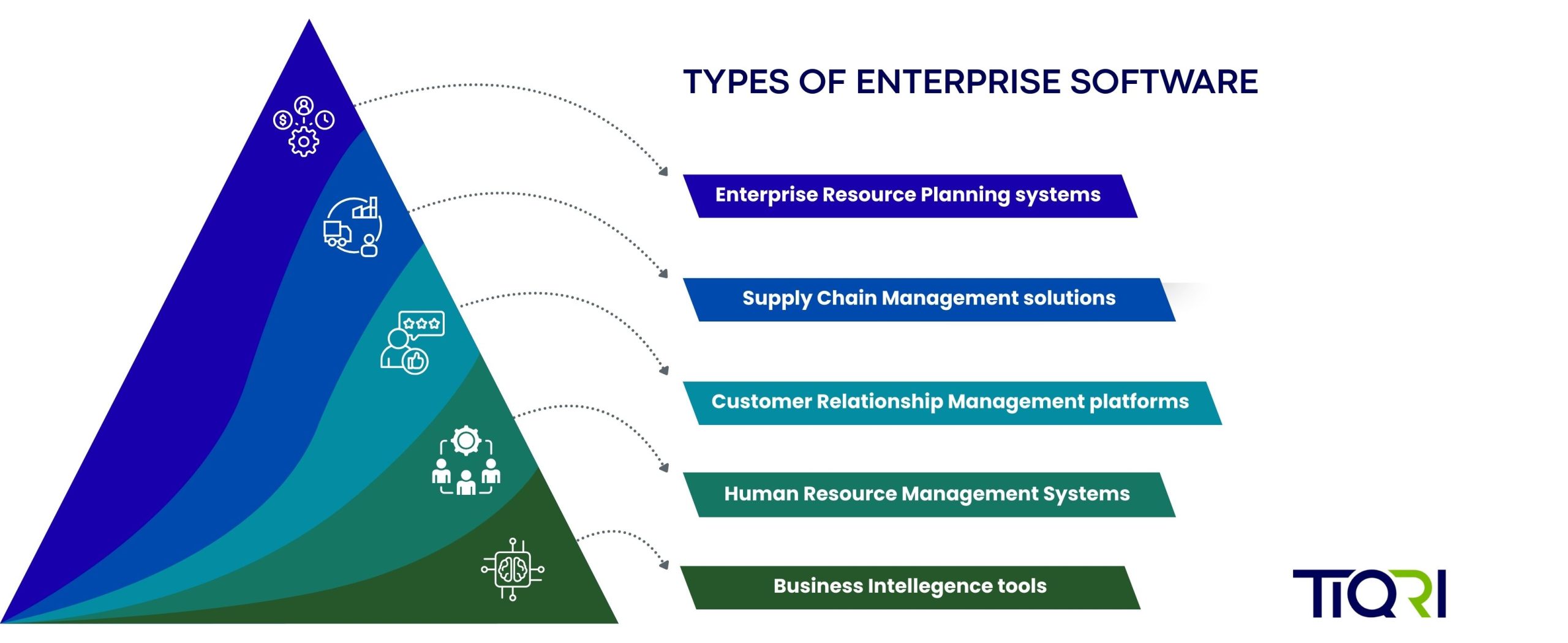
Common examples include enterprise resource planning systems that unify business operations, customer relationship management platforms that support engagement, supply chain management tools that optimise production flows, business intelligence systems that provide analytics, and human resource management software that automates workforce processes.

These applications work together to create a unified ecosystem that supports both strategic and operational needs, providing large scale support across an entire organisation.

Why Businesses Need Enterprise Software

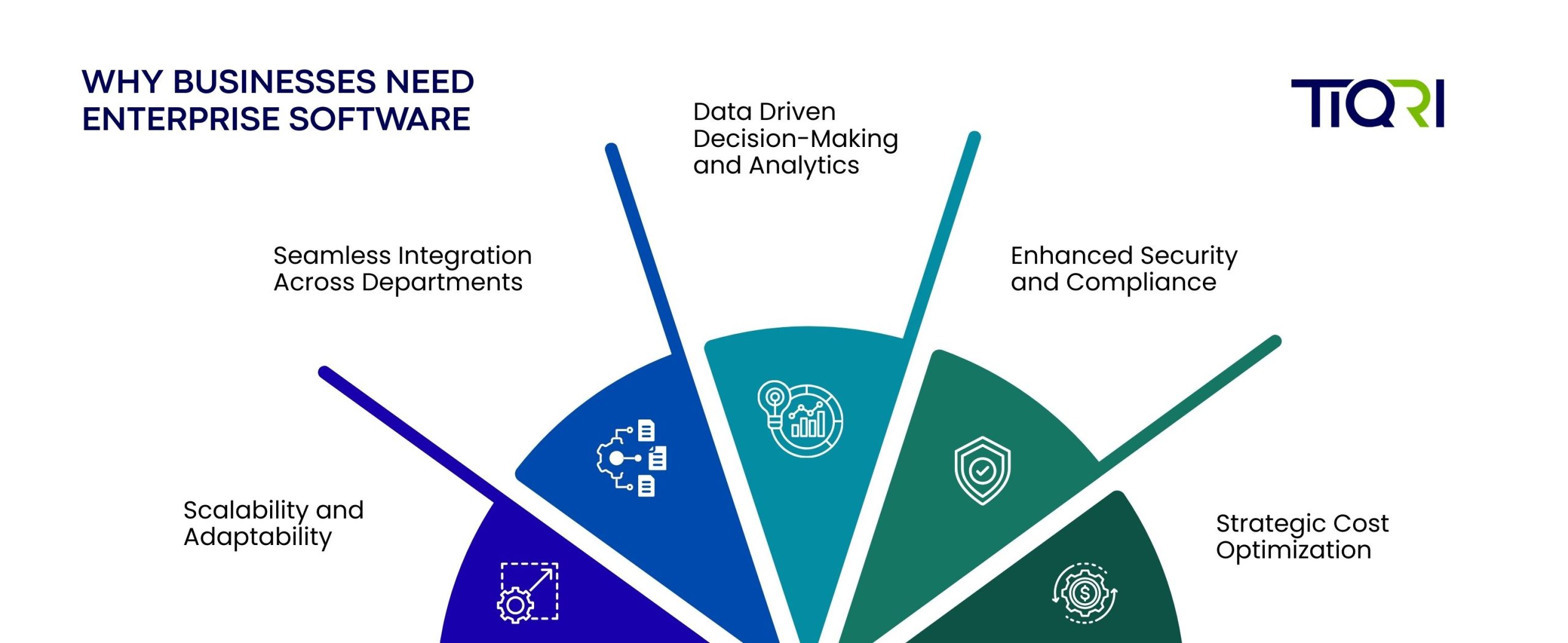
  1. Scalability and Adaptability

Growing companies need systems that evolve alongside their operations. Enterprise platforms accommodate increasing user volumes, new business units, and shifts in market conditions without compromising performance.

  1. Seamless Integration Across Departments

These applications ensure that information flows easily between finance, HR, operations, and customer facing teams. Integration reduces duplication, improves consistency, and supports strategic alignment across the organisation.

  1. Data Driven Decision-Making and Analytics

Enterprise software gives leaders access to reliable, real time insights. With improved analytics, businesses gain the ability to forecast demand, understand performance trends, and respond quickly to emerging opportunities.

  1. Enhanced Security and Compliance

With growing regulatory requirements, companies need platforms that protect sensitive information and support compliance frameworks. Enterprise systems offer role based access, audit trails, encryption, and other safeguards.

  1. Strategic Cost Optimization

Enterprise software is an antidote to the escalating costs of inefficiency and allows organisations to reallocate human talent to high-impact tasks, rather than administration. When implemented with a focused budget strategy these solutions are an engine for sustained profitability.

Types of Enterprise Software

There are several types of enterprise software within the broader field of enterprise applications, each designed to support specific operational areas. Organisations typically use a mix of these platforms, depending on their structure and strategic goals.

  • Enterprise Resource Planning systems bring finance, procurement, inventory, and operations together in a connected environment.
  • Supply Chain Management solutions coordinate suppliers, distribution channels, logistics, and production schedules.
  • Customer Relationship Management platforms support sales pipelines, service interactions, and marketing communication.
  • Human Resource Management Systems manage attendance, payroll, performance evaluations, training, and recruitment
  • Business Intelligence tools analyse large volumes of data to generate insights for improved decision-making.

How Is Enterprise Software Different from Other Software?

Enterprise software differs from consumer oriented applications in terms of scale, purpose, and architecture.

While regular software focuses on individual productivity or personal tasks, enterprise platforms support entire organisations with thousands of users working simultaneously. They rely on robust infrastructure, strict security protocols, complex integrations, and high availability requirements.

Consumer tools are often built for convenience and ease of adoption, whereas enterprise platforms prioritise reliability, compliance, and operational continuity. They also require ongoing configuration and optimisation to align with evolving business processes, something not typically needed in standard applications.

Benefits of Enterprise Software Development

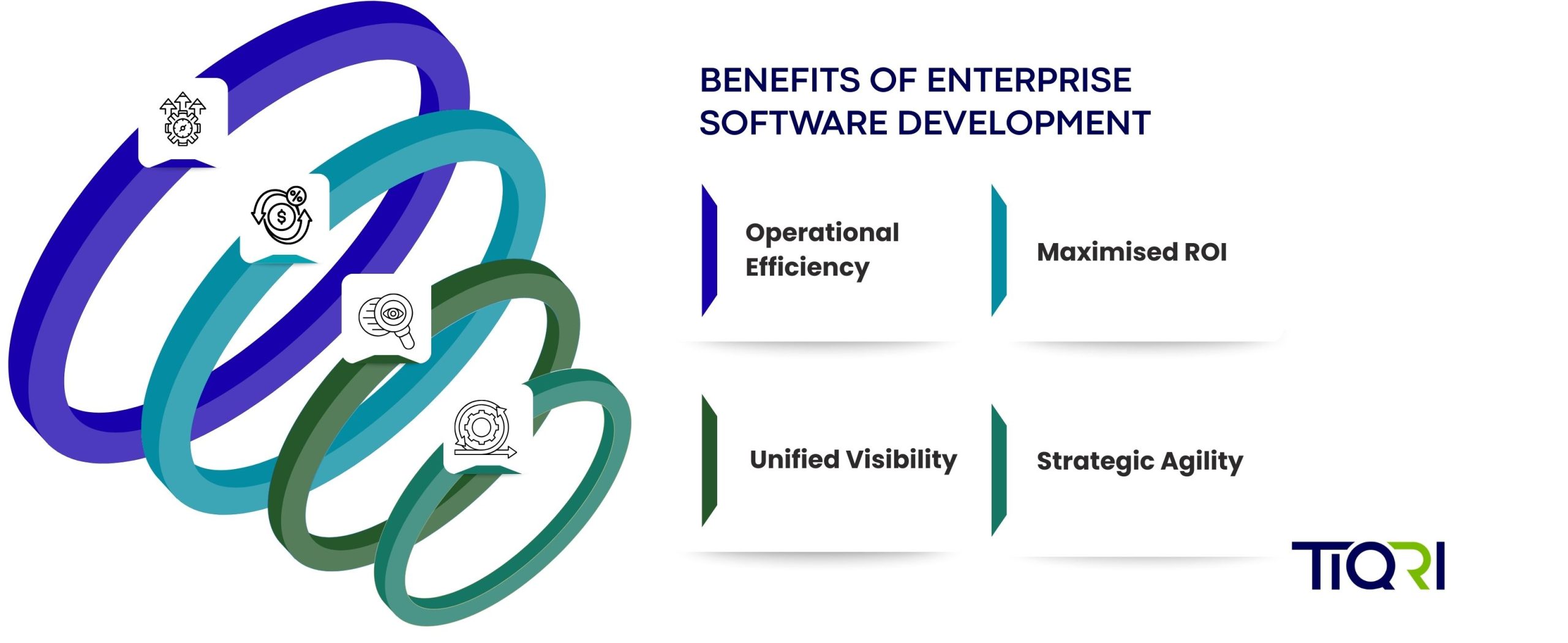
Custom enterprise solutions allow organisations to design systems that match their exact needs. Several advantages stand out.

  • Operational Efficiency – Workflow optimisation and automation reduce unnecessary steps and allow teams to focus on high value tasks.
  • Unified Visibility – Transparency and centralised data ensure that decision makers have access to accurate information without navigating siloed systems.
  • Maximised ROI – Higher ROI through efficiency and resource management becomes achievable when processes are aligned and supported by integrated technology
  • Strategic Agility – Improved business agility helps companies respond faster to market changes, customer demands, and internal shifts.


Custom development supports these goals by enabling precise control over features, architecture, scalability, and long term technology strategy. Enterprise software development that is tailored to unique business needs and functions brings significant value to organisations that need tailored solutions that evolve with their operations.


Strengthening Business Growth Through Purpose Built Platforms

Enterprise platforms support businesses in managing growth and staying focused as their operations become more complex. When organisations adopt technology that can evolve with them, decision-making becomes clearer and day to day work runs with fewer disruptions. This approach helps companies maintain momentum in an environment where needs and priorities shift quickly.

For organisations exploring options, custom business software solutions provide a strategic edge by aligning technology directly with business goals. Companies that require specialised features or future ready systems can explore business software solutions built to match their operational footprint.

For those considering tailored platforms, TIQRI’s expertise in building advanced systems offers a clear advantage. Their team provides end to end support, helping businesses strengthen performance using solutions designed to grow with them.

Get in touch today to discuss your project. Reach out to Alex on mobile +47 477 59 563 or email [email protected]

Let’s talk about your project

    Reach out for a non-committal chat